Wild Ways Wildlife Rescue Guide: This article is part of the Wild Ways Wildlife Rescue Guide series, which provides practical advice on how to respond when wildlife is injured, orphaned, or in distress in South Africa.
What To Do If You Find Injured Wildlife (Wildlife Rescue Guide)
Finding injured wildlife can be upsetting and many people immediately want to help. However, the most important thing to understand is that wildlife often behaves very differently around humans, and what may appear to be an emergency is sometimes normal behaviour.
Knowing what to do and what not to do can make the difference between helping wildlife or unintentionally causing harm. Learning the correct response techniques through Wildlife First Responder Training can help you confidently assess situations and assist wildlife safely.
Quick Steps If You Find Injured Wildlife
- Observe the animal from a distance before approaching
- Keep people, pets, and noise away
- Do not feed the animal or give it water
- Contact a permitted wildlife rehabilitation centre for advice
- Keep the environment calm and minimise stress
First Step: Watch From a Distance
Before approaching any wild animal, take a moment to observe from a safe distance.
Wild animals will rarely show their normal behaviour when a potential predator is nearby, and to them, humans are predators.
If you are standing close to the animal, they may freeze, hide, or remain still, even if they are capable of moving away once you leave.
Give the animal space and observe quietly from a distance before deciding whether intervention is truly necessary. Are they moving awkwardly? Are they unbalanced? Are they limping or leaning to one side? Are there any signs of a visible injury?
Wildlife Are Experts at Hiding pain, stress, and Injury
Wild animals are extremely good at hiding pain, stress, and even injuries. Showing weakness in the wild can attract predators, so animals often suppress obvious signs of distress.
For example, hares can quickly grow fur over wounds, making injuries difficult to see even when they are present.
This means that even animals that appear calm or healthy may still be injured. If you can walk up to a wild animal and pick it up, something is very wrong!
Stress Can Kill Wildlife
One of the biggest dangers to wildlife during rescue situations is stress.
Wild animals can die from stress faster than from their injuries, and unfortunately humans are often their biggest stressor.
Handling, chasing, crowding, or repeatedly approaching wildlife can cause extreme physiological stress that may lead to shock and death. Understanding how to reduce stress and handle wildlife safely is one of the key skills taught in wildlife rescue training.
Call a permitted rescue centre or your nearest wildlife first responder, minimise interaction and keep the environment calm and quiet. No selfies!
If You Find Wildlife That May Be Injured
- Keep calm and observe from a distance before intervening
- Keep people, pets, and noise away from the animal
- Do not feed the animal or give them water - EVER!
- Do not attempt to treat injuries yourself
- Contact a permitted wildlife rehabilitation centre for advice
When Wildlife Need Help
Wildlife may require assistance if you observe:
- Visible bleeding or obvious injuries
- Inability to stand or move normally
- Animals caught by a cat or dog
- Animals lying in dangerous locations such as roads, unable to move themselves to safety
- Young animals that are clearly orphaned or injured
If the animal you found was caught by a cat, it is considered a medical emergency. Read our guide on what to do if a cat catches a bird .
When Wildlife Should Be Left Alone
Many animals that appear to be abandoned are actually being cared for by their parents nearby.
Young birds, for example, often spend time on the ground while learning to fly. These are called fledglings, and their parents are usually watching and feeding them from nearby. Hares, deer and antelope will leave their young alone all day, coming back breifly to feed them: they are not abandoned.
Removing healthy young animals from the wild is one of the most common wildlife rescue mistakes.
Common Wildlife Emergency: Bird Hits a Window
One of the most common wildlife emergencies people encounter is a bird that has collided with a window. Birds cannot see glass and often strike windows at high speed when they see reflections of sky, trees, or plants.
Even if a bird appears to recover and fly away, it may still have suffered a brain injury or eye injury that could lead to death later.
If you find a bird after a window strike, read our guide on what to do if a bird hits a window to learn how to safely contain the bird and contact a permitted wildlife rehabilitation centre.
Injured Wildlife FAQs
How do I know if wildlife really needs help?
Wild animals often hide injuries and stress. If the animal cannot move normally, has visible injuries, or allows you to approach closely, they need help. C
Should I move injured wildlife?
If the animal is in immediate danger, such as on a road, it may need to be moved to a safer place nearby. Always minimise handling and contact a wildlife rehabilitation centre.
Who should I call if I find injured wildlife?
You should contact a permitted wildlife rehabilitation centre. Our emergency contact page lists wildlife rescue organisations across South Africa.
Learn Wildlife Rescue the Right Way
IIf you want to help wildlife safely and confidently, learning the correct response techniques is essential. Our training helps you become a Wildlife First Responder so you can assess situations and assist wildlife responsibly.
The Wildlife First Responder Training course teaches practical wildlife rescue skills including how to assess situations, reduce stress for animals, safely contain injured wildlife, and transport animals to permitted wildlife rehabilitation centres.
Become a Wildlife First Responder
Learn how to respond safely when wildlife is in distress and become part of a growing network of trained responders helping wildlife across South Africa.
Members of the Wild Ways Pack receive a discount on this training and gain access to the private community forum where responders connect, share experiences, and access wildlife rescue resources.
View Wildlife First Responder TrainingWildlife Rescue Guides
If you encounter wildlife in distress, these guides explain how to respond safely in common rescue situations.
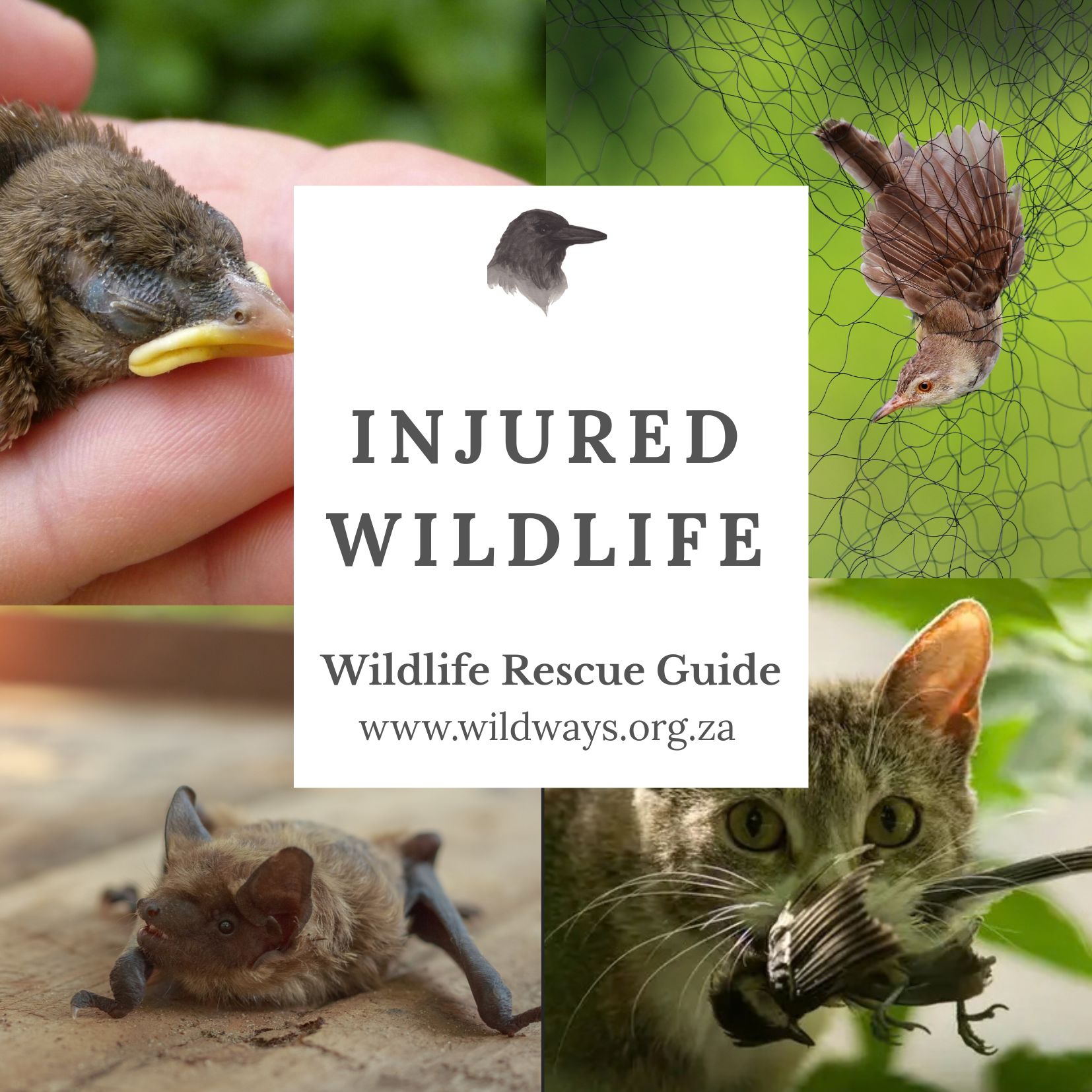 What To Do If You Find Injured Wildlife
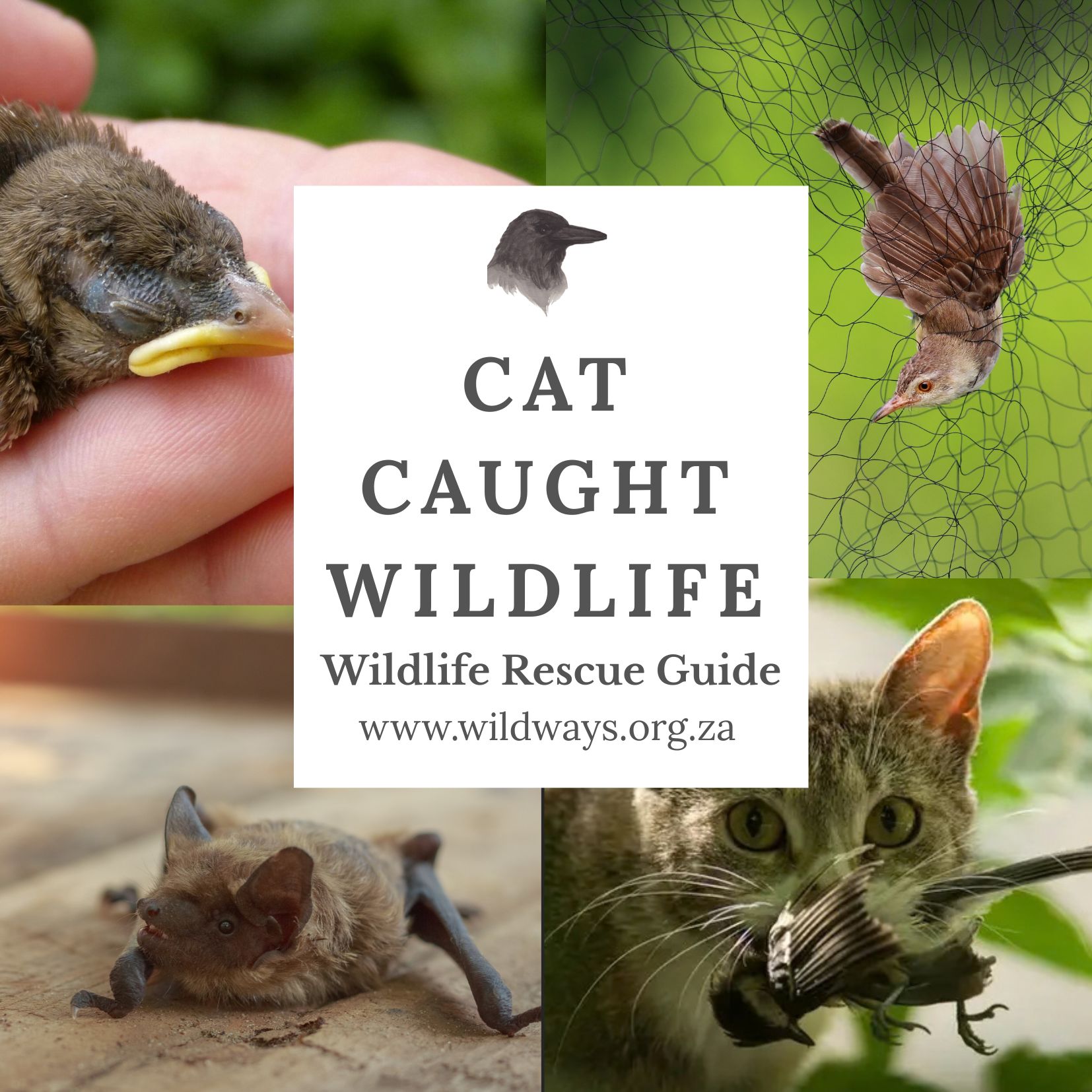 What To Do If a Cat Catches a Bird
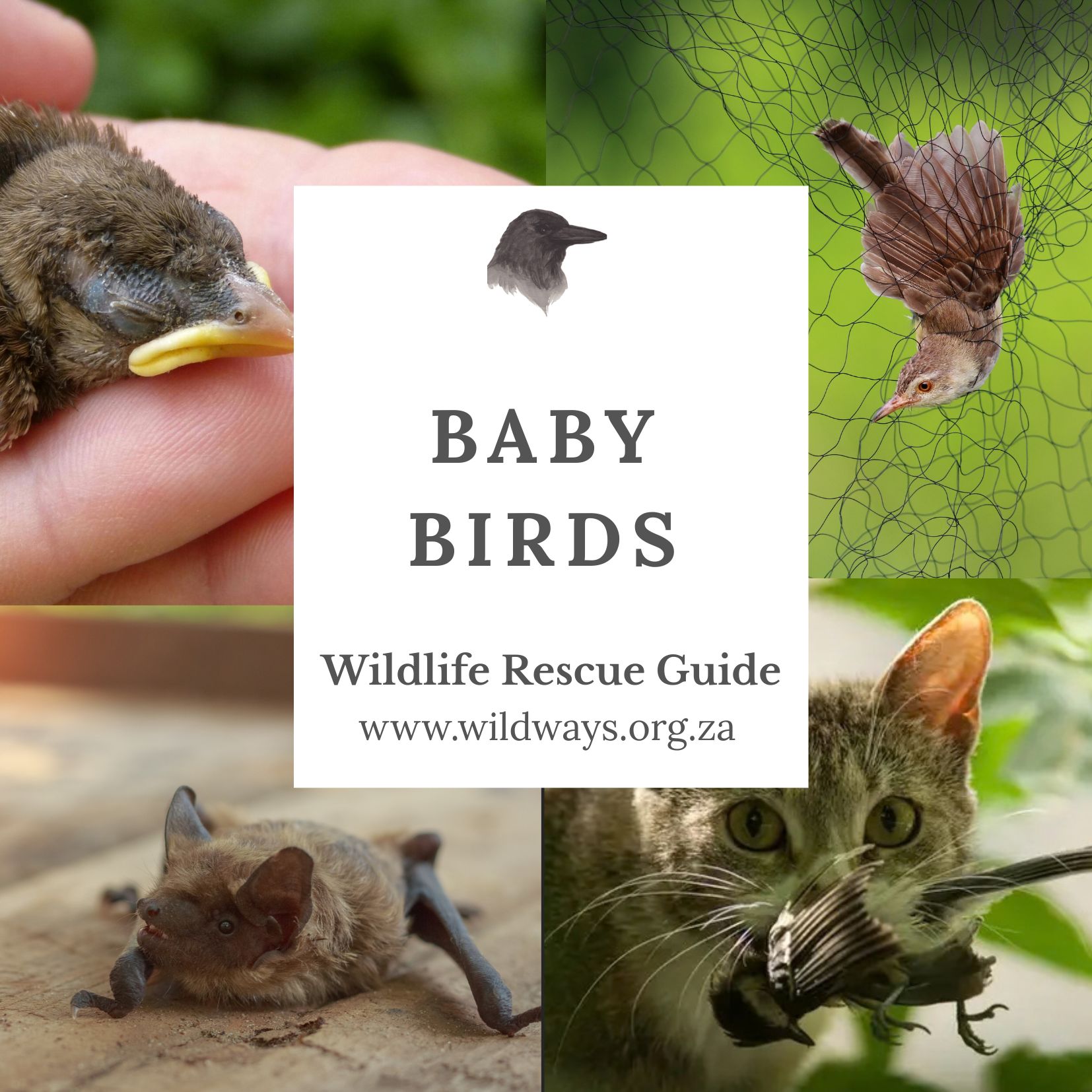 Baby Bird on the Ground
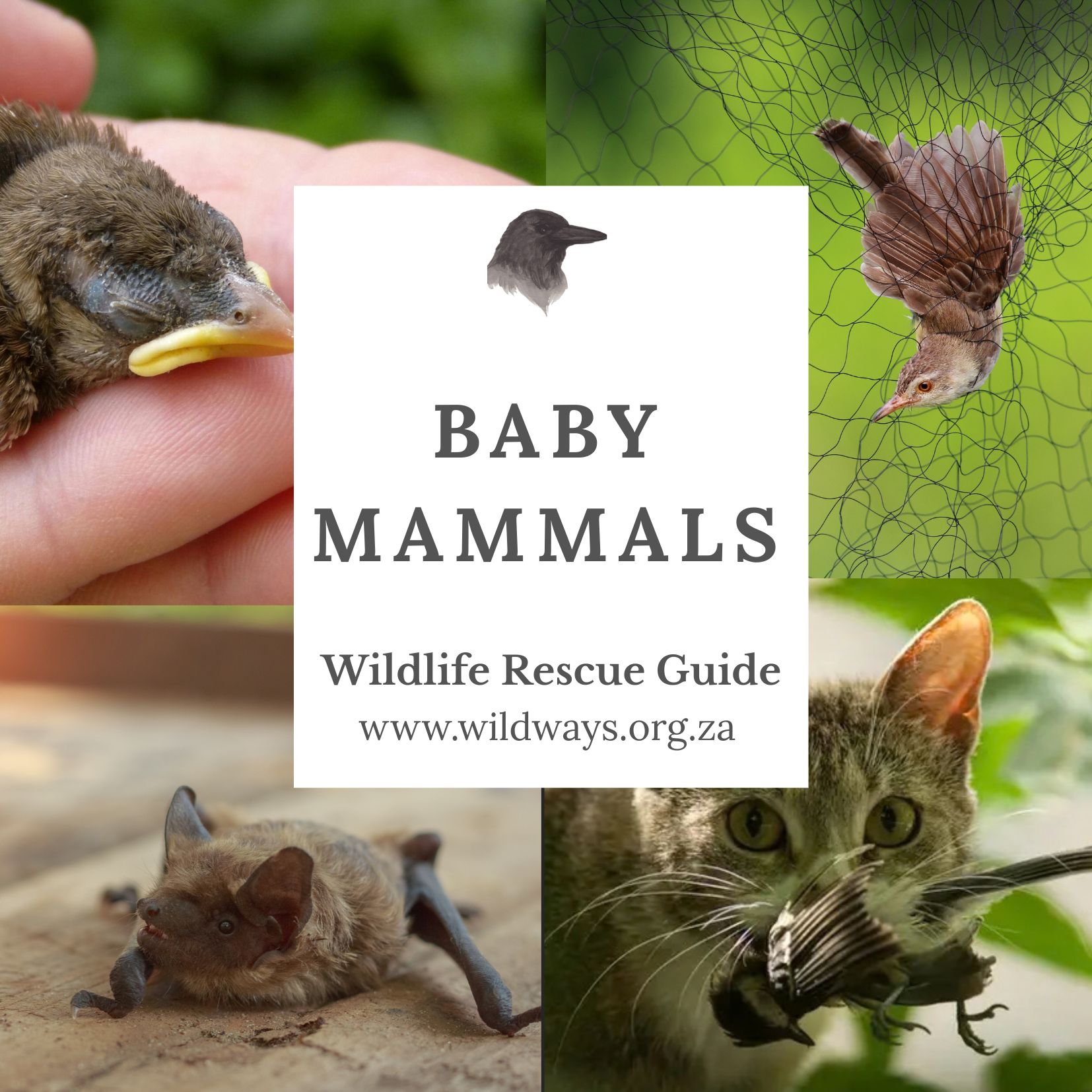 What To Do If You Find a Baby Mammal
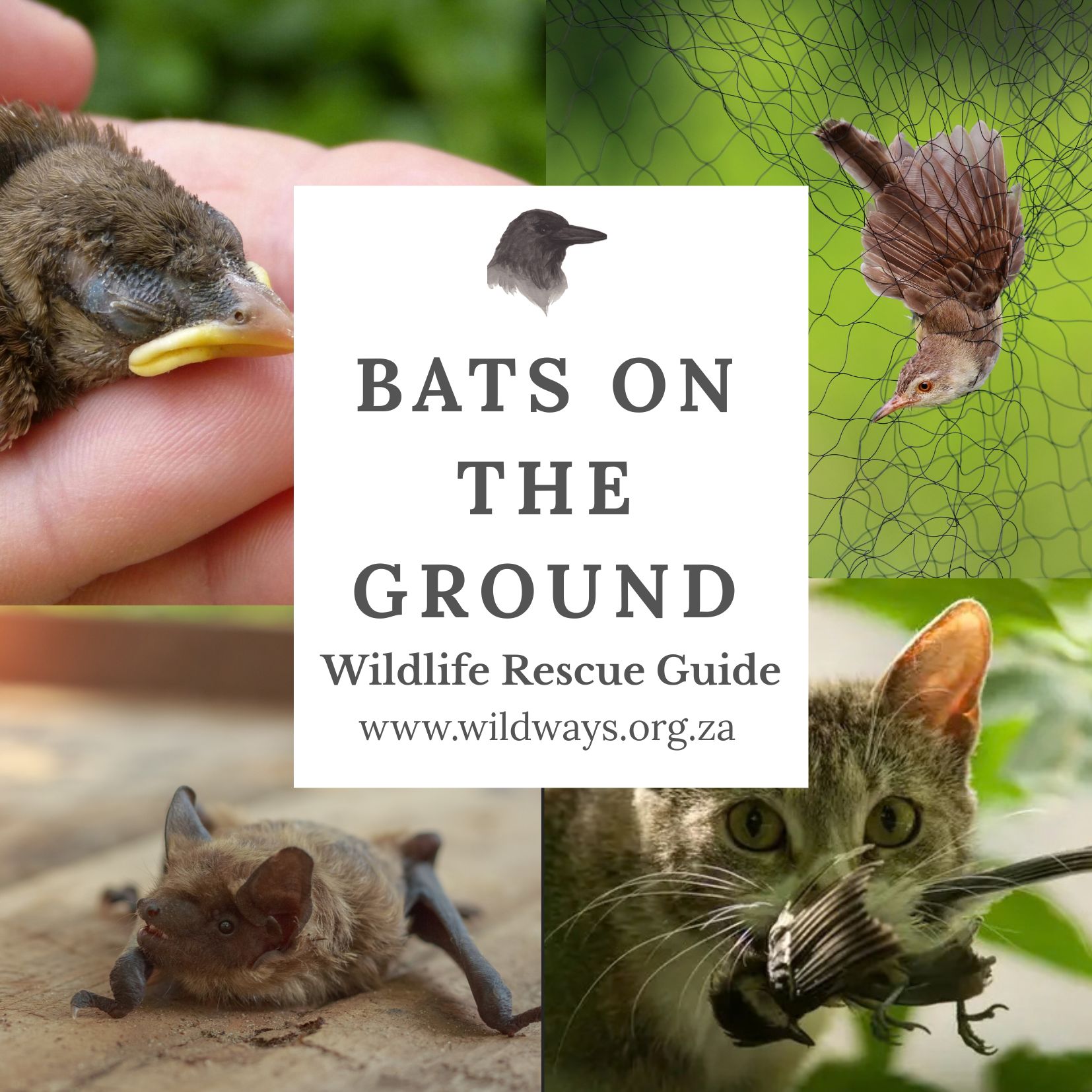 What To Do If You Find a Bat
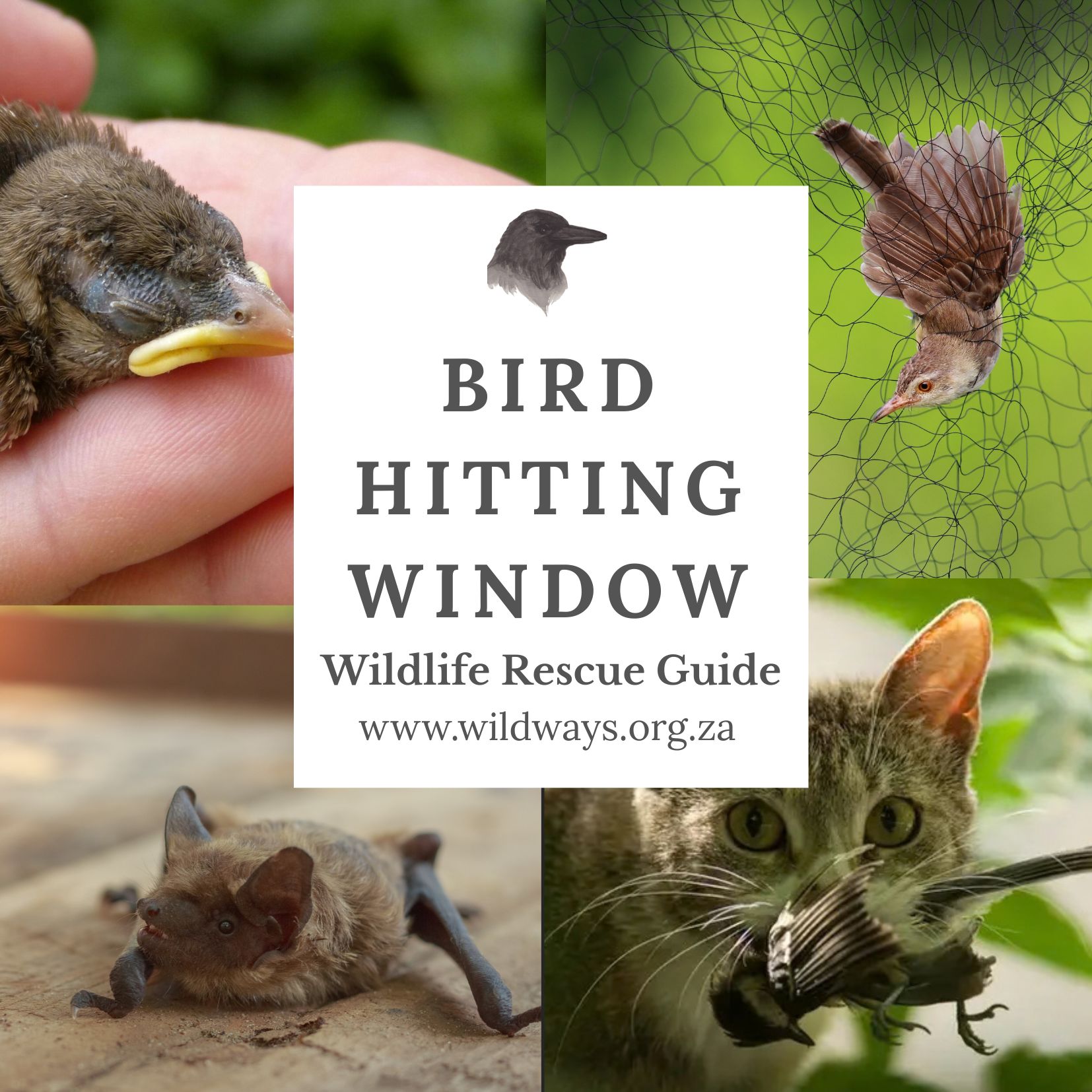 What To Do If a Bird Hits a Window
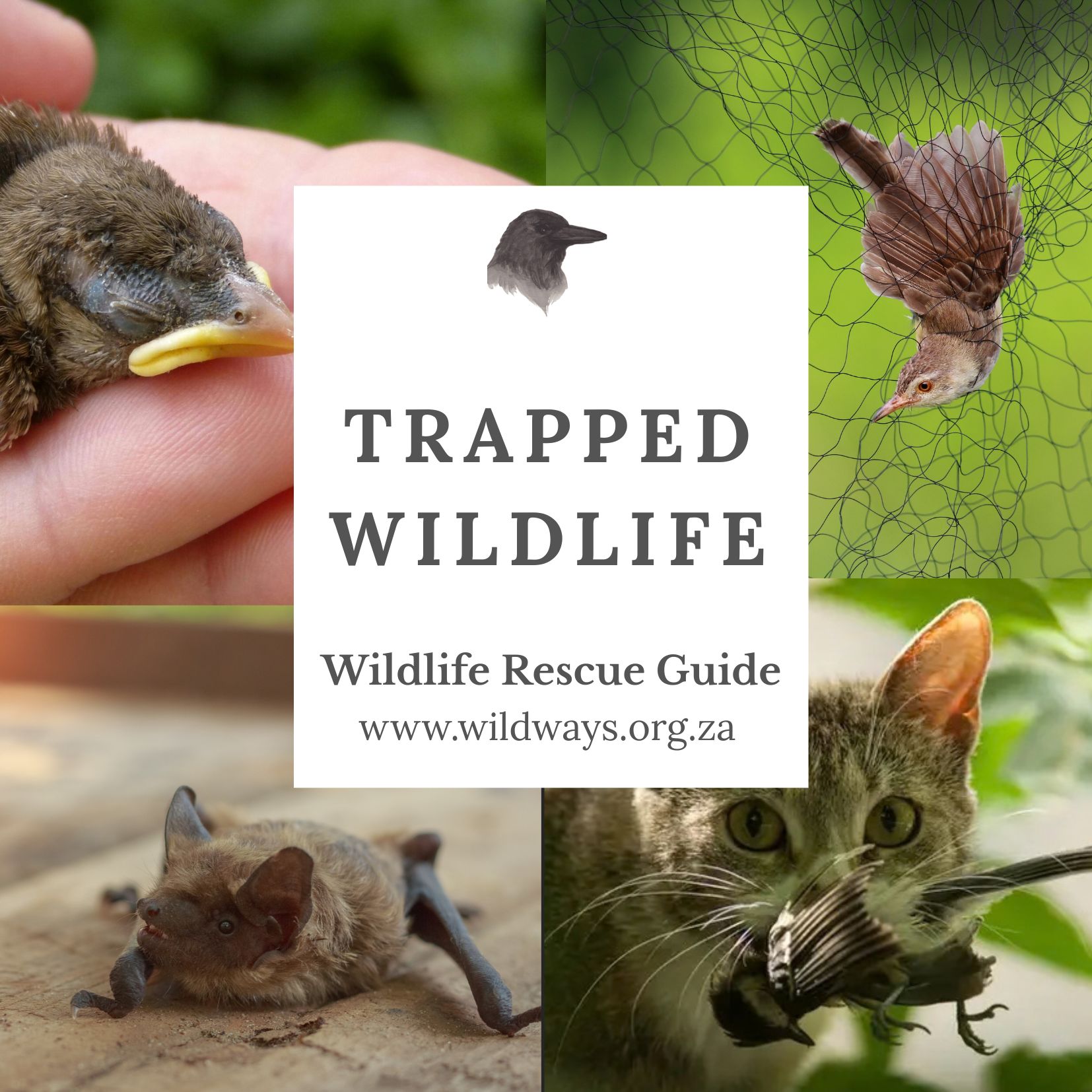 What To Do If Wildlife Is Trapped