Wild Ways Wildlife Rescue Guide: This article is part of the Wild Ways Wildlife Rescue Guide series, which provides practical advice on how to respond when wildlife is injured, orphaned, or in distress in South Africa.
What To Do If You Find a Baby Mammal (Wildlife Rescue Guide)
Finding a baby mammal alone can be worrying, and many people assume the baby has been abandoned. However, in many cases the young animal is not orphaned at all.
Many wild mammals deliberately leave their babies hidden and alone for long periods while they search for food. This strategy protects the baby from predators.
Before intervening, it is important to observe carefully and understand how wild mammals care for their young.
If you are unsure how to respond when wildlife is in distress, you can also read our guide on what to do if you find injured wildlife.
Quick Steps If You Find a Baby Mammal
- Observe from a distance before intervening
- Do not assume the baby has been abandoned
- Keep pets and people away
- If the animal appears injured or weak, keep it warm
- Contact a permitted wildlife rehabilitation centre for advice
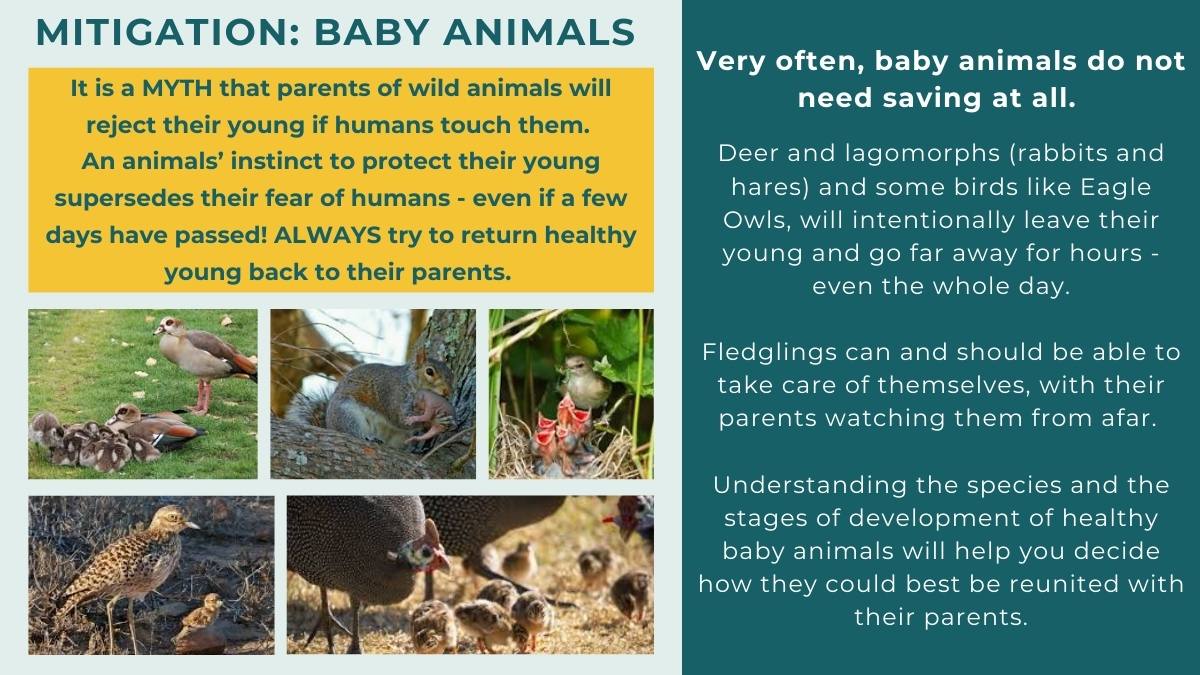
Wild parents do not abandon their babies simply because they smell like humans. If a baby has been touched, it can still be reunited with its mother.
Many Baby Mammals Are Hidden, Not Abandoned
Many wild mammals use a strategy where they hide their babies while they forage for food. The mother may only return a few times a day to nurse the baby.
This behaviour helps avoid attracting predators to the baby.
Examples of animals that use this strategy include:
- Hares
- Antelope such as duiker and steenbok
- Rodents
- Squirrels
- Mongooses
Observe from a Distance
Before intervening, step back and observe from a safe distance.
If the baby appears healthy and quiet, it is often best to leave the animal where it is so the mother can return.
Human presence can prevent the mother from approaching.
Signs the Baby Mammal May Need Help
A baby mammal may require assistance if you observe:
- Visible injuries
- The animal is cold, weak, or unresponsive
- The baby has been caught by a cat or dog
- The baby is crying continuously for long periods
- The mother has been confirmed dead nearby
If the Baby Has Been Caught by a Cat
If a baby mammal has been caught by a cat, it is considered a medical emergency.
Cat saliva contains bacteria that can cause fatal infections in wildlife, even if the wounds appear small.
The animal will need urgent treatment and antibiotics from a rehabilitation centre.
You can also read our guide on what to do if a cat catches wildlife.
If You Must Contain the Baby
If the baby mammal is injured or in danger, it may need to be contained temporarily while you seek help.
- Place the baby in a warm, dark, ventilated box
- Line the box with soft cloth or towel
- Keep the environment quiet
- Do not feed the animal
- Contact a permitted wildlife rehabilitation centre
Stress Can Kill Wildlife
Wild animals experience intense stress when handled by humans.
Noise, crowds, and handling can cause shock, which may be fatal to small mammals.
Keeping the animal warm, dark, and quiet while waiting for professional help is the safest approach.
If you find a baby squirrel that may need help, please contact Squirrel Rescue & Rehab Western Cape. Their contact details can be found on our Wildlife Emergency Contact page.
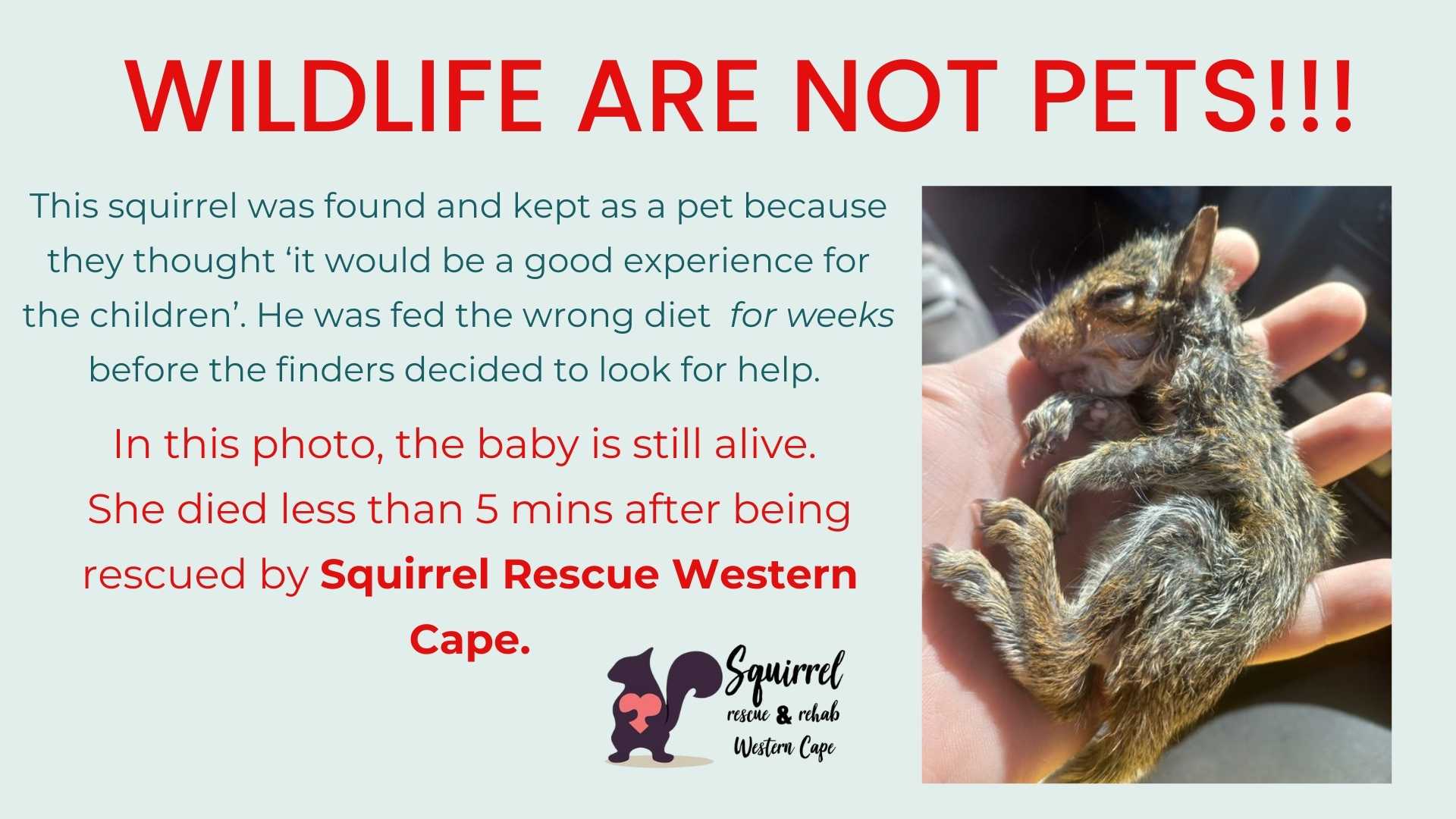
Wildlife are not pets. This baby squirrel was kept as a pet and later died after being rescued by Squirrel Rescue & Rehab Western Cape.
Learn Wildlife Rescue the Right Way
If you want to help wildlife safely and confidently, learning the correct response techniques is essential.
The Wildlife First Responder Training course teaches practical wildlife rescue skills including how to assess wildlife situations, reduce stress, and transport animals to permitted wildlife rehabilitation centres.
Become a Wildlife First Responder
Learn how to respond safely when wildlife is in distress and become part of a growing network of trained responders helping wildlife across South Africa.
Members of the Wild Ways Pack receive a discount on this training and gain access to the private community forum where responders connect, share experiences, and access wildlife rescue resources.
View Wildlife First Responder TrainingWildlife Rescue Guides
If you encounter wildlife in distress, these guides explain how to respond safely in common rescue situations.
 What To Do If You Find Injured Wildlife
 What To Do If a Cat Catches a Bird
 Baby Bird on the Ground
 What To Do If You Find a Baby Mammal
 What To Do If You Find a Bat
 What To Do If a Bird Hits a Window
 What To Do If Wildlife Is Trapped