Wild Ways Wildlife Rescue Guide: This article is part of the Wild Ways Wildlife Rescue Guide series, which provides practical advice on how to respond when wildlife is injured, orphaned, or in distress in South Africa.
What To Do If a Bird Hits a Window (Wildlife Rescue Guide)
Bird-window collisions are extremely common and unfortunately millions of birds die each year after hitting glass. When a bird strikes a window it may appear stunned or may even fly away shortly afterwards, but this does not always mean the bird has recovered.
If you are unsure what to do when you encounter injured wildlife, you can also read our guide on what to do if you find injured wildlife.
Quick Steps If a Bird Hits a Window
- Approach calmly and keep people and pets away
- Make a donut shaped nest out of unfrayed fabric
- Place the 'nest' in a well ventilated box and gently put the bird in the 'nest'
- Keep the box in a dark, quiet place
- Do not give food or water
- Contact a permitted wildlife rehabilitation centre for advice
Why Birds Hit Windows
Birds often cannot see glass. They may see reflections of trees, sky, or vegetation and believe they are flying into open space. At other times they may see plants inside homes and attempt to reach them.
These collisions can happen at high speed, which means even birds that initially survive the impact may have internal injuries.
Birds Can Appear to Recover but Still Be Injured
After hitting a window, a bird may sit quietly for a few minutes and then suddenly fly away. While this may look like a full recovery, birds can suffer serious injuries that are not immediately visible.
Window strikes frequently cause brain injuries, internal trauma, or eye damage. A bird that flies away may still die later from its injuries.
This is why it is always important to contact a permitted wildlife rehabilitation centre for guidance, even if the bird appears to recover.
If the Bird Is Still on the Ground
If the bird remains on the ground after the collision, it is likely stunned or injured.
- Approach calmly and keep people and pets away
- Make a donut shaped nest out of unfrayed fabric
- Place the 'nest' in a well ventilated box and gently put the bird in the 'nest'
- Keep the box in a dark, quiet place
- Do not give food or water
- Contact a permitted wildlife rehabilitation centre for advice
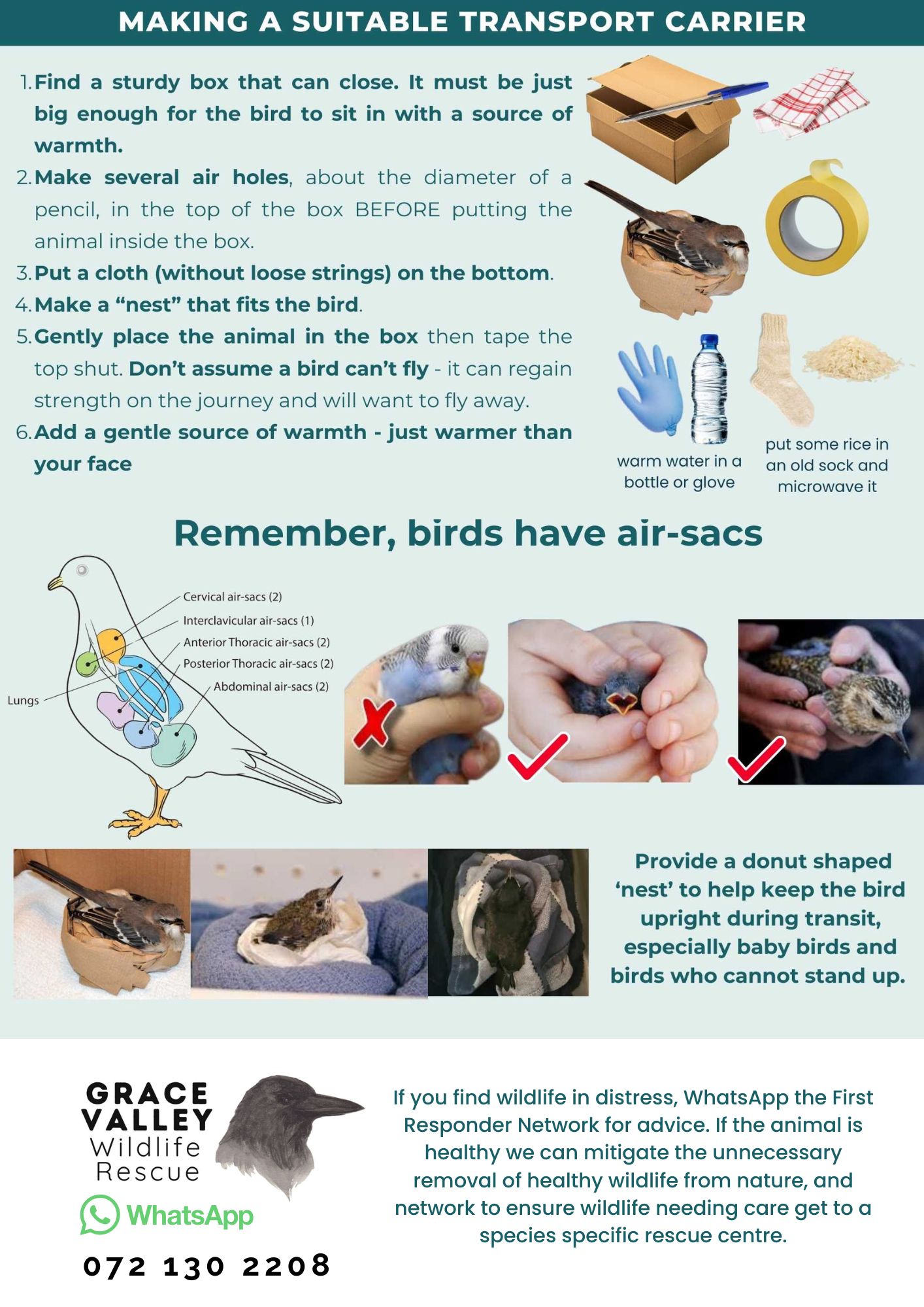
Example of a simple transport box for injured birds. A ventilated cardboard box lined with soft cloth keeps the bird dark, quiet, and safe while you contact a permitted wildlife rehabilitation centre.
Stress Can Kill Wildlife
Wild animals can die from stress faster than from their injuries. Handling, noise, or excessive attention can worsen the situation.
Keeping the bird in a dark, quiet container reduces stress while you seek advice from a rehabilitation centre.
Learn Wildlife Rescue the Right Way
If you want to help wildlife safely and confidently, learning the correct response techniques is essential.
Our online Wildlife First Responder Training course teaches practical wildlife rescue skills including how to safely contain injured wildlife, reduce stress, and transport animals to permitted wildlife rehabilitation centres.
Become a Wildlife First Responder
Learn how to respond safely when wildlife is in distress and become part of a growing network of trained responders helping wildlife across South Africa.
Members of the Wild Ways Pack receive a discount on this training and gain access to the private community forum where responders connect, share experiences, and access wildlife rescue resources.
View Wildlife First Responder TrainingWildlife Rescue Guides
If you encounter wildlife in distress, these guides explain how to respond safely in common rescue situations.
 What To Do If You Find Injured Wildlife
 What To Do If a Cat Catches a Bird
 Baby Bird on the Ground
 What To Do If You Find a Baby Mammal
 What To Do If You Find a Bat
 What To Do If a Bird Hits a Window
 What To Do If Wildlife Is Trapped