Wild Ways Wildlife Rescue Guide: This article is part of the Wild Ways Wildlife Rescue Guide series, which provides practical advice on how to respond when wildlife is injured, orphaned, or in distress in South Africa.
What To Do If You Find a Bat (Wildlife Rescue Guide)
Bats are fascinating and important animals that play a vital role in ecosystems by controlling insect populations and pollinating plants. However, when people encounter bats during the day or inside buildings, it can cause concern.
Knowing how to respond safely helps protect both you and the bat.
If you are unsure how to respond when wildlife is in distress, you can also read our guide on what to do if you find injured wildlife.
Quick Steps If You Find a Bat
- Do not touch the bat with bare hands
- Keep children and pets away
- If the bat is inside, isolate the room if possible
- If the bat is grounded or injured, gently place an unfrayed towel over them and put them gently in a warm, dark, and well ventilated box
- Contact a permitted wildlife rehabilitation centre for advice
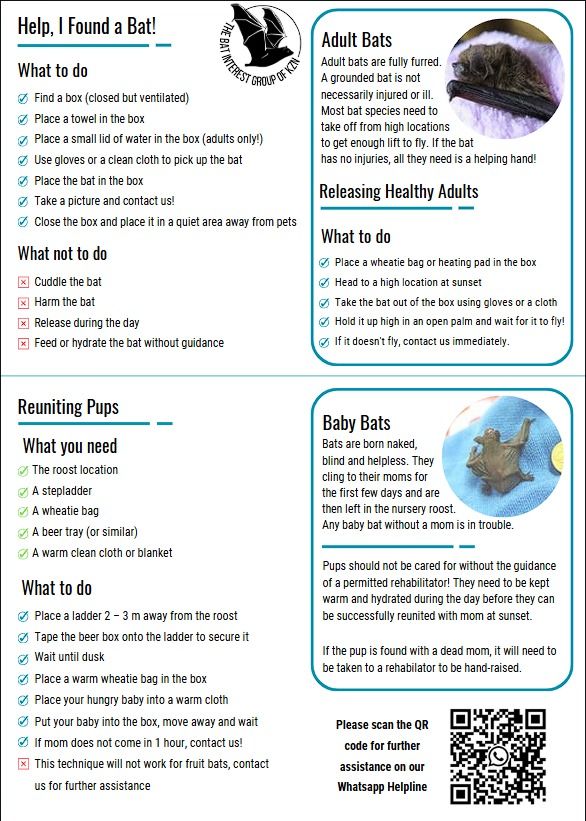
Infographic guide explaining what to do if you find an adult bat or a baby bat.
When Bats Need Help
Bats are nocturnal animals, meaning they are usually active at night. Seeing a bat during the day does not always mean something is wrong, but it can sometimes indicate illness, exhaustion, or injury.
A bat may need help if you observe:
- A bat lying on the ground
- A bat unable to fly
- A bat caught by a cat or dog
- A bat tangled in netting or fencing
- A bat trapped indoors with no clear exit
Do Not Handle Bats with Bare Hands
Although bats are generally not aggressive, they may bite if they feel threatened or frightened.
If a bat needs to be contained, gently place an unfrayed cloth over them and put them in a warm, dark, and well ventilated box and contact a permitted wildlife rehabilitation centre.
If a Bat Is Inside Your House
Bats sometimes enter buildings accidentally while searching for insects or shelter.
If the bat is flying inside your house:
- Stay calm and avoid chasing the bat
- Turn off interior lights
- Open windows or doors leading outside
- The bat will often find its way out on its own
If a Bat Is on the Ground
A bat found on the ground is often injured, exhausted, or dehydrated.
Keep people and pets away and contact a permitted wildlife rehabilitation centre for advice.
Do not attempt to feed or give water to the bat.
If a Bat Has Been Caught by a Cat
If a bat has been caught by a cat, it is considered a medical emergency. Cat saliva carries bacteria that is often fatal to wildlife.
The bat will require urgent veterinary care and antibiotics.
You can also read our guide on what to do if a cat catches wildlife.
Stress Can Kill Wildlife
Wild animals can die from stress faster than from their injuries. Loud noises, handling, and crowding can worsen the situation.
Keeping the environment quiet and allowing professionals to assess the bat is the safest approach.
Learn Wildlife Rescue the Right Way
If you want to help wildlife safely and confidently, learning the correct response techniques is essential.
The Wildlife First Responder Training course teaches practical wildlife rescue skills including how to safely contain wildlife, reduce stress, and transport animals to permitted wildlife rehabilitation centres.
Become a Wildlife First Responder
Learn how to respond safely when wildlife is in distress and become part of a growing network of trained responders helping wildlife across South Africa.
Members of the Wild Ways Pack receive a discount on this training and gain access to the private community forum where responders connect, share experiences, and access wildlife rescue resources.
View Wildlife First Responder TrainingWildlife Rescue Guides
If you encounter wildlife in distress, these guides explain how to respond safely in common rescue situations.
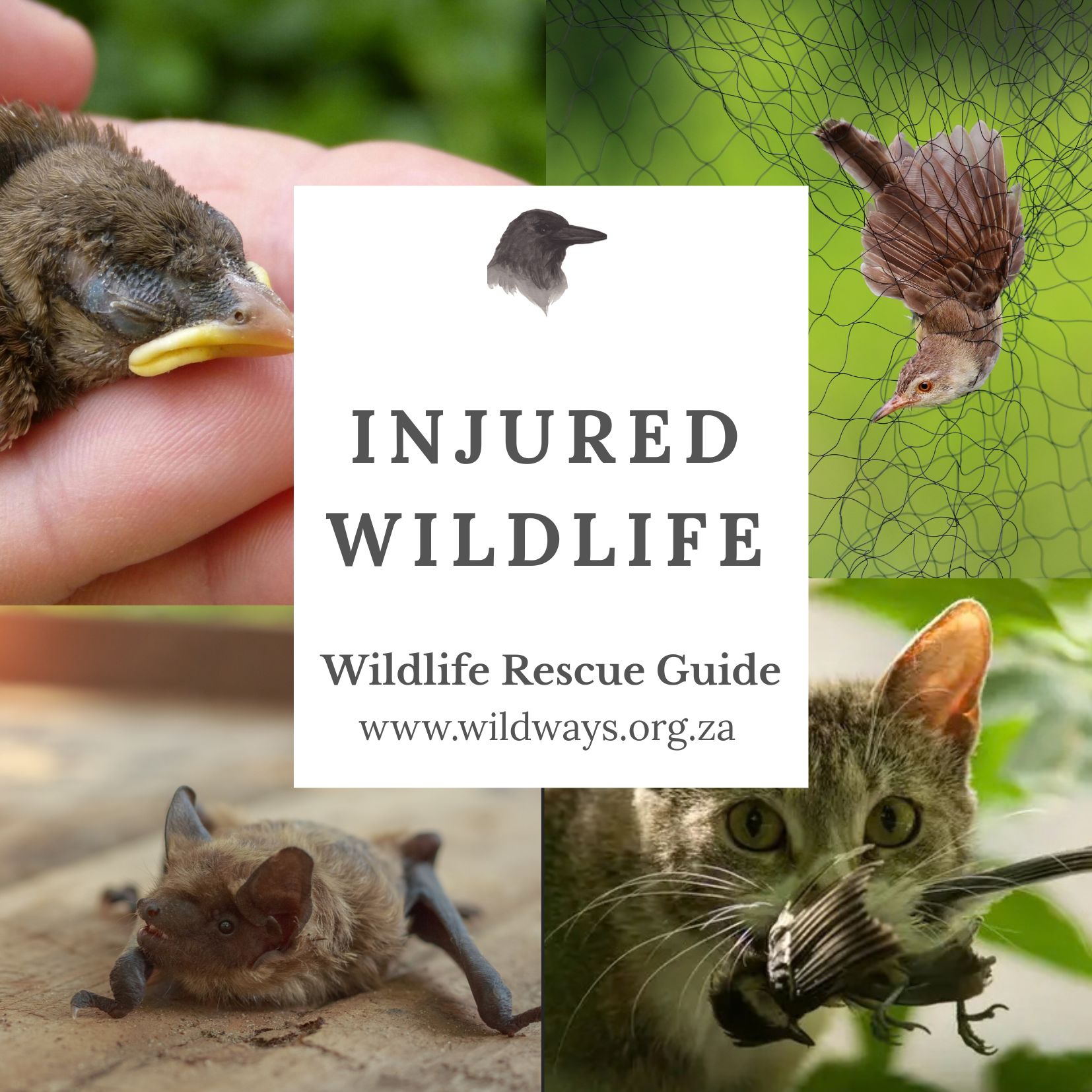 What To Do If You Find Injured Wildlife
 What To Do If a Cat Catches a Bird
 Baby Bird on the Ground
 What To Do If You Find a Baby Mammal
 What To Do If You Find a Bat
 What To Do If a Bird Hits a Window
 What To Do If Wildlife Is Trapped