Wild Ways Wildlife Rescue Guide: This article is part of the Wild Ways Wildlife Rescue Guide series, which provides practical advice on how to respond when wildlife is injured, orphaned, or in distress in South Africa.
Baby Bird on the Ground: What To Do (Wildlife Rescue Guide)
Finding a baby bird on the ground can be alarming, and many people immediately assume the bird has been abandoned. However, in many cases the bird does not need rescuing at all.
In fact, removing healthy young birds from the wild is one of the most common wildlife rescue mistakes. Well-meaning people often pick up fledgling birds that are exactly where they are supposed to be.
Before intervening, it is important to understand the different stages of baby birds and how parent birds care for them.
If you are unsure how to respond when wildlife is in distress, you can also read our guide on what to do if you find injured wildlife.
Quick Steps If You Find a Baby Bird
- Observe the bird from a distance first
- If the bird is a healthy fledgling, leave it where it is
- Keep pets and people away
- If the bird is a hatchling or nestling, keep it warm
- Contact a permitted wildlife rehabilitation centre for advice
Why Baby Birds Are Often Found on the Ground
Many bird species leave the nest before they are strong fliers. These young birds are called fledglings.
Fledglings spend several days on the ground or in low branches while they build flight strength. During this time they hop, flutter, and explore their surroundings while their parents continue feeding and protecting them.
Although the fledgling may appear alone, the parents are usually nearby watching carefully and returning frequently with food.
When humans approach, the parents often stay hidden to avoid attracting predators to their young.
Watch from a Distance
Before deciding to intervene, step back and observe from a distance for a few minutes.
If the bird is hopping, fluttering, calling, or moving around normally, it is likely a healthy fledgling and should be left alone.
The best way to help is simply to keep pets, children, and other disturbances away while the parents continue caring for their young.
How to Tell the age of the Baby Bird You Found
The key to knowing whether the bird needs help is identifying whether it is a hatchling, nestling, or fledgling.
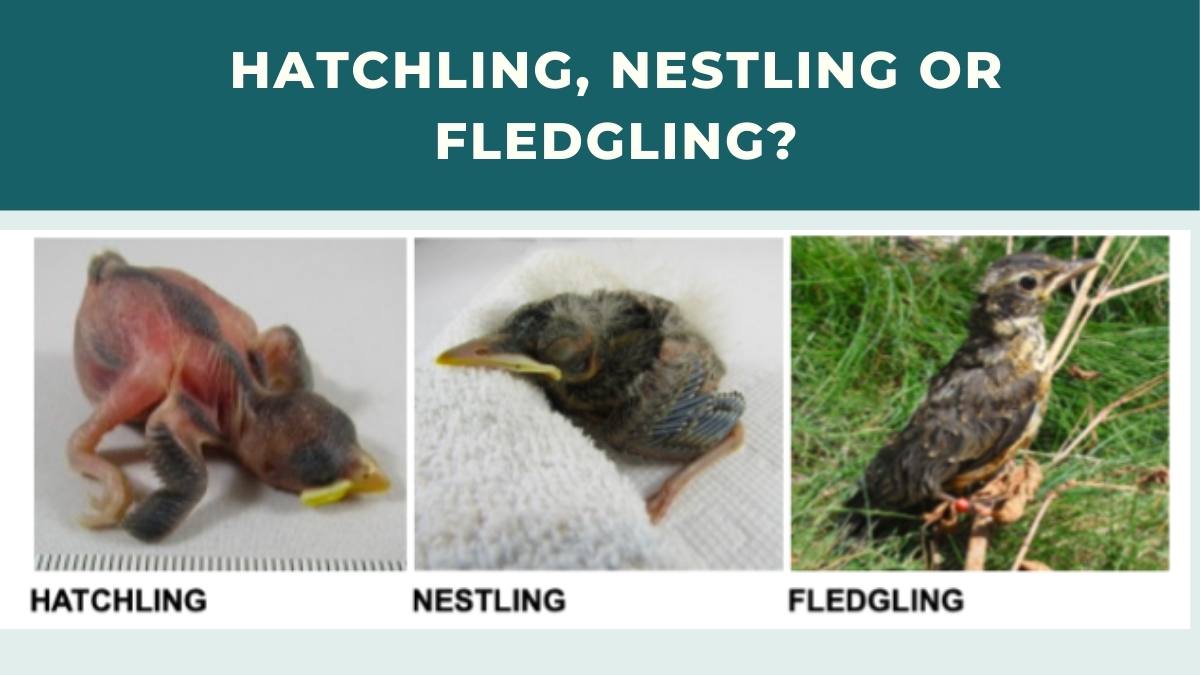
Baby birds develop through several stages. Correctly identifying whether the bird is a hatchling, nestling, or fledgling helps determine whether intervention is needed.
Hatchlings
Hatchlings are very young birds that have just emerged from the egg.
- Almost no feathers
- Eyes closed or barely open
- Unable to move around
- Completely dependent on the parents for warmth, protection, and food
A hatchling on the ground needs help immediately, as it cannot survive outside the nest.
Nestlings
Nestlings are slightly older than hatchlings but still live in the nest.
- Partially feathered
- Unable to fly
- Still dependent on parents for food
If a nestling is found on the ground, it has usually fallen from the nest and will need assistance.
Fledglings
Fledglings are young birds that have left the nest but are still learning to fly.
- Fully feathered
- Bright, alert eyes
- Able to hop, flutter, or perch
- Often calling for parents
Healthy fledglings belong exactly where they are. Removing them from the wild prevents their parents from continuing to care for them. The only time you need to intervene is if you cannot find the parents, or the parents don't return within a few hours. Fledglings still rely on their parents for food and if the parents don't know where they are, the fledgling will not survive. Contact a permitted wildlife rehabilitation centre.
Altricial vs Precocial Birds
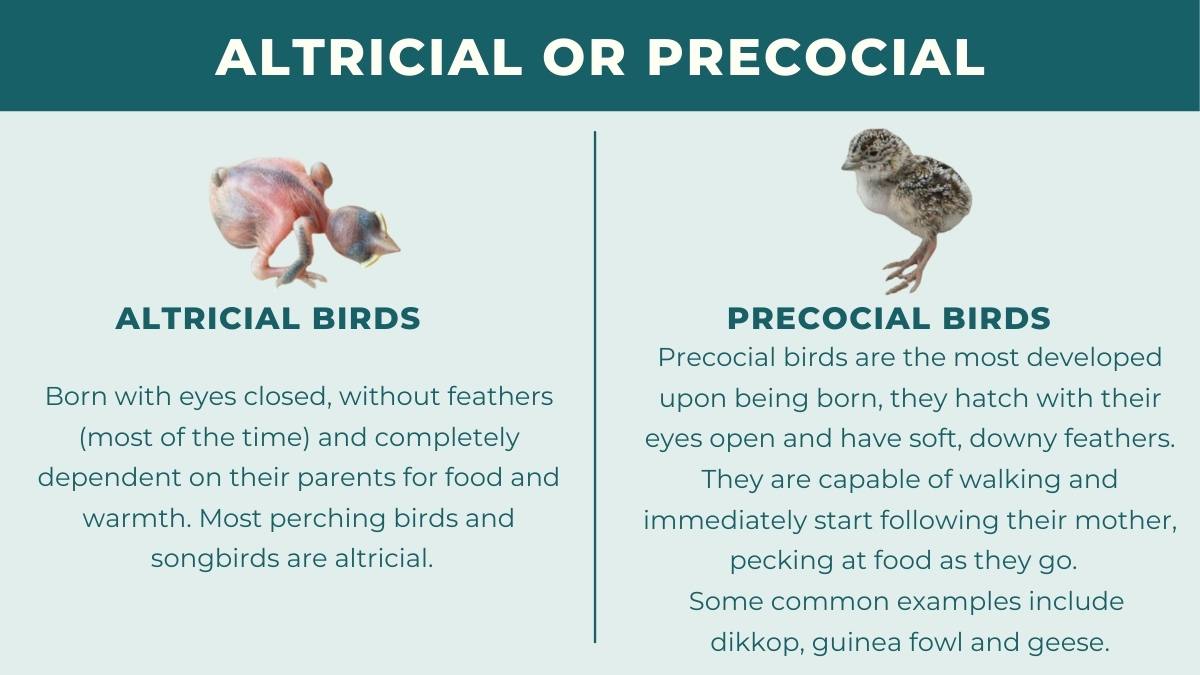
Bird species develop differently depending on whether they are altricial or precocial.
Many garden birds such as robins, sparrows, and thrushes are altricial. Their chicks hatch helpless and must remain in the nest while they grow feathers and strength.
Other birds such as ducks, chickens, and plovers are precocial. Their chicks hatch covered in down and are able to walk and follow their parents almost immediately.
Understanding the difference helps determine whether a young bird on the ground is in trouble or simply developing normally.
If You Find a Hatchling or Nestling
Very young birds cannot regulate their body temperature and must be kept warm until help arrives.
Place the bird gently into a small container lined with soft cloth shaped like a donut-shaped nest. This allows the bird to sit upright without compressing its delicate air sacs.
Keep the container warm, dark, and quiet and contact a permitted wildlife rehabilitation centre as soon as possible.
If the bird has been caught by a cat or brought to you by a cat, it is considered a medical emergency. Cat saliva carries bacteria that is often fatal to wildlife, especially small birds. In these cases the bird will need urgent treatment and antibiotics from a rehabilitation centre. Read our guide on what to do if a cat catches a bird.
Stress Can Kill Wildlife
Wild animals experience extreme stress when handled by humans. This stress can sometimes be more dangerous than the original problem.
Handling, noise, crowds, and repeated disturbances can cause shock in small birds.
Keeping the bird warm, dark, and quiet while waiting for professional advice is the safest approach.
Learn Wildlife Rescue the Right Way
If you want to help wildlife safely and confidently, learning the correct response techniques is essential.
The Wildlife First Responder Training course teaches practical wildlife rescue skills including how to identify baby bird stages, reunite young wildlife with their parents, and safely transport animals to permitted wildlife rehabilitation centres.
Become a Wildlife First Responder
Learn how to respond safely when wildlife is in distress and become part of a growing network of trained responders helping wildlife across South Africa.
Members of the Wild Ways Pack receive a discount on this training and gain access to the private community forum where responders connect, share experiences, and access wildlife rescue resources.
View Wildlife First Responder TrainingWildlife Rescue Guides
If you encounter wildlife in distress, these guides explain how to respond safely in common rescue situations.
 What To Do If You Find Injured Wildlife
 What To Do If a Cat Catches a Bird
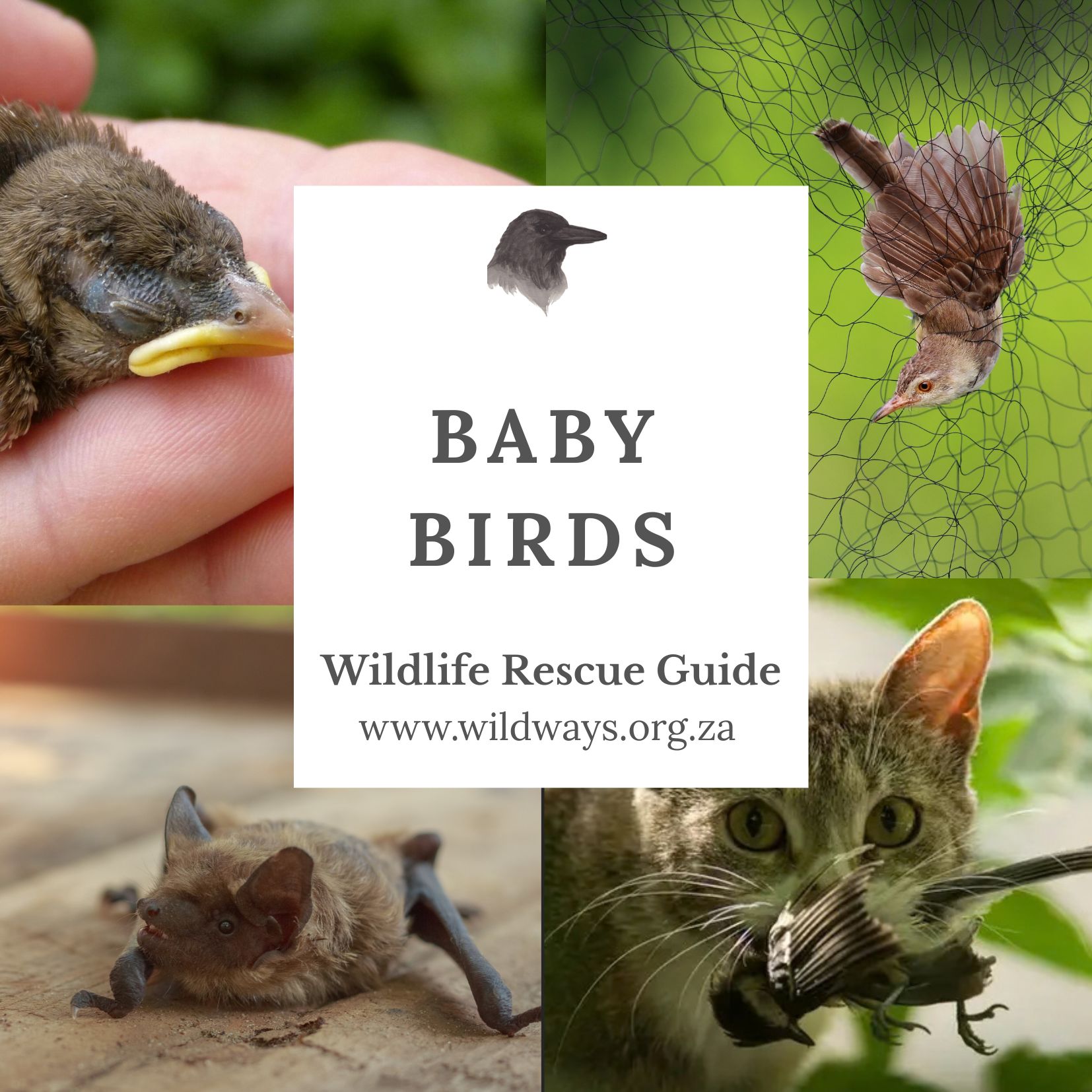 Baby Bird on the Ground
 What To Do If You Find a Baby Mammal
 What To Do If You Find a Bat
 What To Do If a Bird Hits a Window
 What To Do If Wildlife Is Trapped