Wild Ways Knowledge Base: This article is part of our Wild Ways Rescue Knowledge Base series, which shares practical advice from wildlife rescue centres about what the public should know when helping wildlife in distress.
You can also explore our Wildlife Rescue Guide for step-by-step help in common wildlife emergencies.
Ready to Ride
- Never give injured wildlife food or water.
- Keep wildlife in a dark, quiet container to reduce stress.
- Minimise handling and human interaction.
- Transport animals to a permitted rescue centre as soon as possible.
Once you have been in touch with your permitted rescue centre for advice. permitted rescue centre and you are getting ready to transport injured wildlife, the goal is to keep the animal calm, safe, and protected from additional stress or injury. Improper handling or transport can worsen injuries and increase the risk of shock.
Wild animals experience humans as predators. Loud noise, bright light, excessive movement, and unnecessary handling can dramatically increase stress levels. A proper transport carrier helps create a quiet, dark, and secure environment while the animal is taken to a permitted wildlife rehabilitation centre.
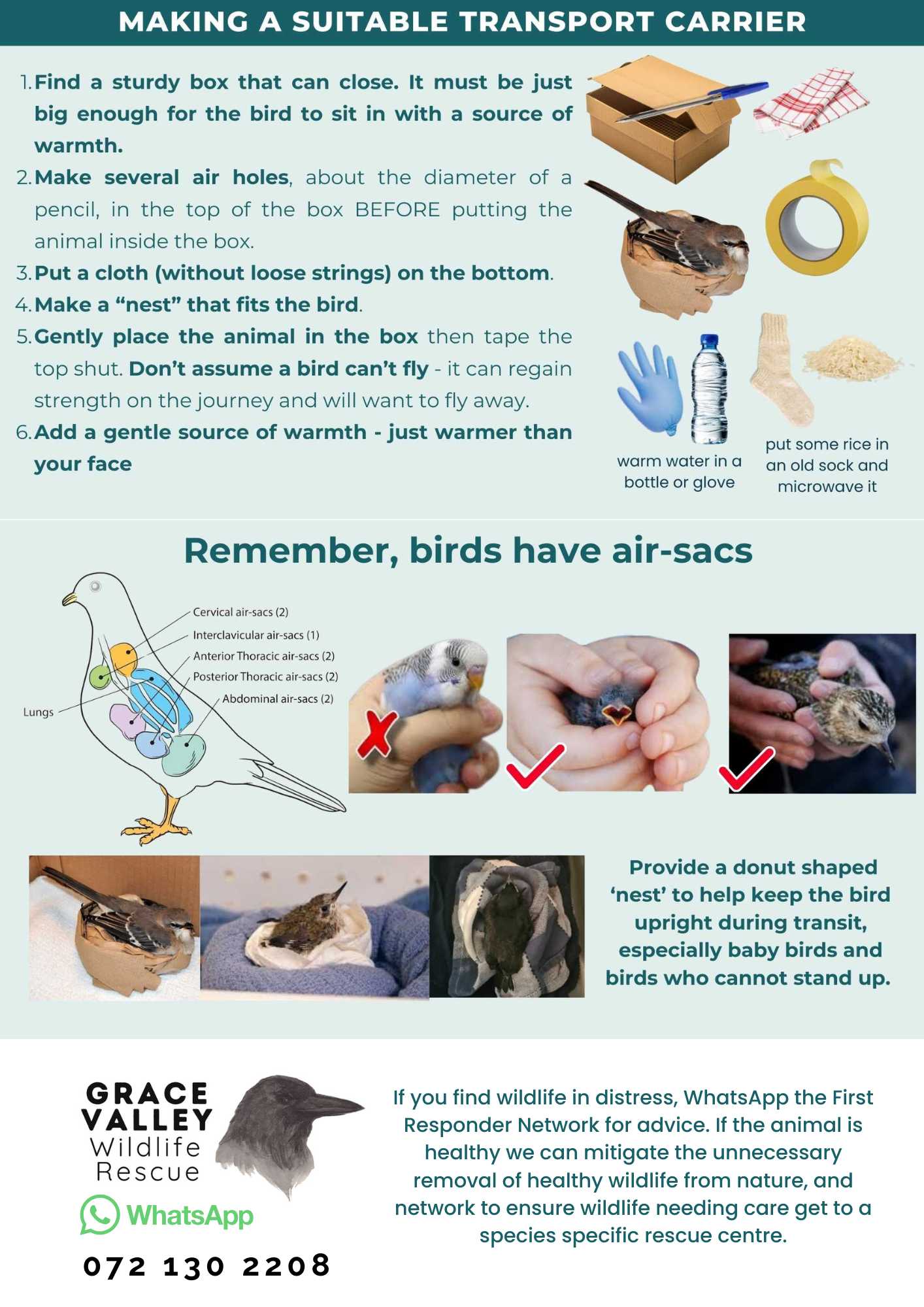
A simple ventilated cardboard box with a secure lid is often the safest transport container for small birds and mammals. Line the bottom of the box with a soft and un-frayed cloth to prevent slipping: we do not want little toes or claws getting caught up in loose strings.
Gently place the animal inside and close the lid securely to create a dark, quiet space. Darkness helps reduce stress and prevents the animal from injuring itself while being transported.
Never transport wildlife in open containers, cages, or containers with loose objects that could cause injury.
Once the animal is safely contained, transport it to a permitted wildlife rehabilitation centre or contact a trained wildlife first responder for assistance.
Learn Wildlife Rescue The Right Way
If you want to confidently assist wildlife during emergencies, our Wildlife First Responder Training teaches practical skills used by wildlife rehabilitators to assess situations, reduce stress, and safely transport animals to permitted rehabilitation centres.
Members of the Wild Ways Pack receive a discount and access to our private wildlife responder community.
View Wildlife First Responder TrainingMore Things Rescue Centres Wish You Knew
Ambulance Not Uber Eats
Read Article
No Kidnapping
Read Article
Feeding Wild Birds
Read Article