Wild Ways Knowledge Base: This article is part of our Wild Ways Rescue Knowledge Base series, which shares practical advice from wildlife rescue centres about what the public should know when helping wildlife in distress.
You can also explore our Wildlife Rescue Guide for step-by-step help in common wildlife emergencies.
The Do's and Don'ts of Feeding Wild Birds
- Never give injured wildlife food or water.
- Keep wildlife in a dark, quiet container to reduce stress.
- Minimise handling and human interaction.
- Transport animals to a permitted rescue centre as soon as possible.
Feeding wild birds can feel like a kind way to help wildlife, but poorly managed feeding stations often cause more harm than good.
One of the most common diseases associated with communal bird feeders is avian trichomoniasis, a parasitic infection that spreads easily when birds gather around shared food and water sources.
Infected birds often appear weak, fluffed up, or unable to swallow properly. Because the disease spreads through saliva and contaminated surfaces, feeders and bird baths can quickly become sources of infection if they are not cleaned properly and regularly.
The problem does not stop with small birds. Raptors such as owls, hawks, and falcons may become infected when they prey on sick birds, meaning diseases that start at feeding stations can spread through the wider ecosystem.
Rather only leave out appropirate food and fresh water in dire circumstances like during a drought or after fires, and if you choose to feed wild birds, good hygiene is essential.
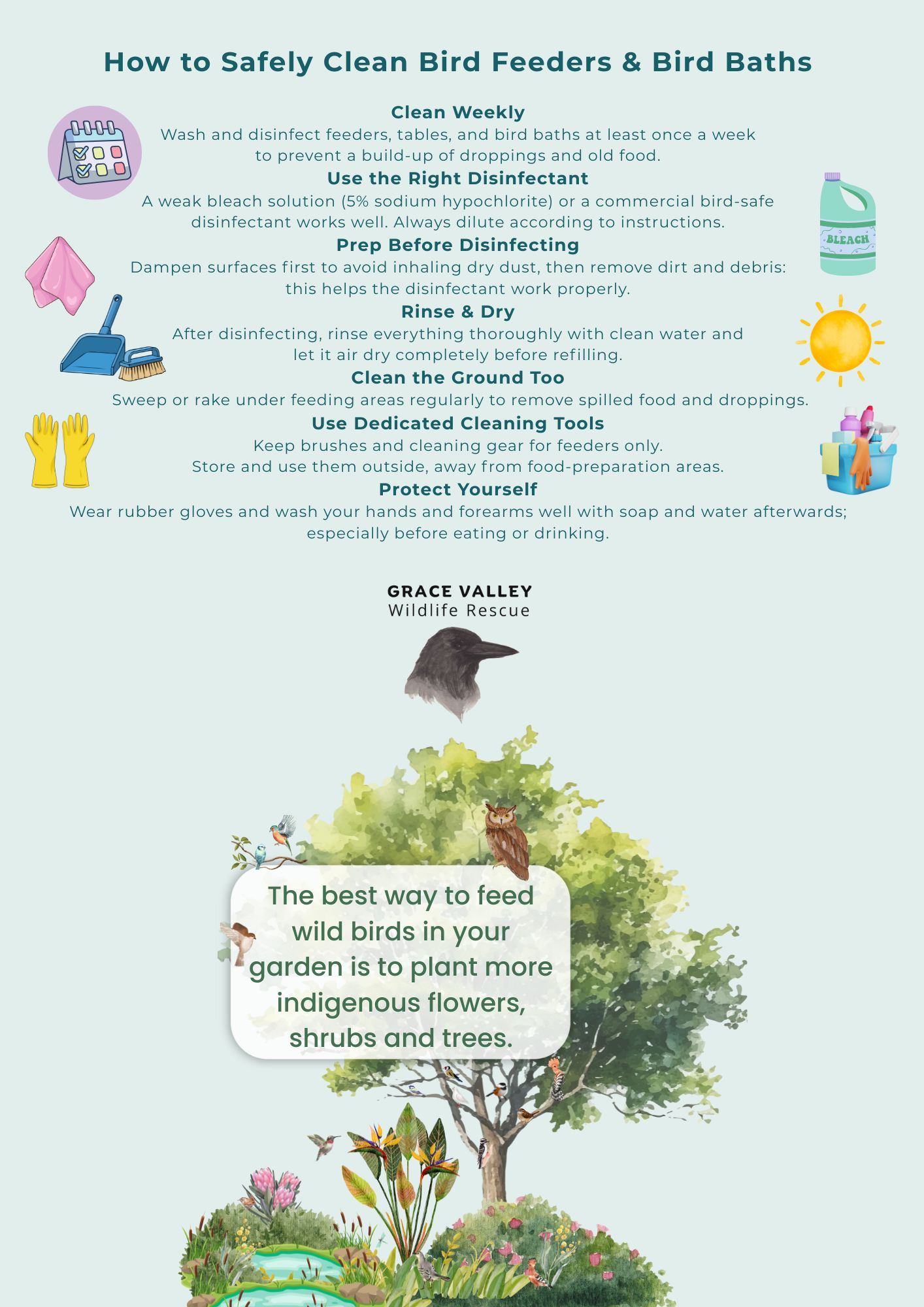
Feeding stations and bird baths should be cleaned regularly to prevent the spread of disease. Stay away from red dyes and sugary foods, and always use fresh wild bird seed. Human food is never good for wildlife.
Having said this, the best way to support wild birds is not through artificial feeding at all. The healthiest and most sustainable way to help birds is by creating natural habitat by planting indigenous trees, shrubs, and flowering plants provides natural food sources, shelter, and nesting spaces for birds and other wildlife.
Feeding wildlife in general can also create long-term problems because animals that become reliant on human-provided food may lose their natural foraging or hunting instincts, making them more vulnerable in the wild.
Healthy ecosystems allow wildlife to find food naturally and by protecting their habitat and planting more indigenous tress and shrubs, we help birds thrive without creating dependence on humans.
Learn Wildlife Rescue The Right Way
If you want to confidently assist wildlife during emergencies, our Wildlife First Responder Training teaches practical skills used by wildlife rehabilitators to assess situations, reduce stress, and safely transport animals to a permitted rescue centre.
Members of the Wild Ways Pack receive a discount and access to our private wildlife responder community.
View Wildlife First Responder TrainingMore Things Rescue Centres Wish You Knew
Ambulance Not Uber Eats
Read Article
No Kidnapping
Read Article
Ready To Ride
Read Article