The Tiny Underground Superhero You Might Never See
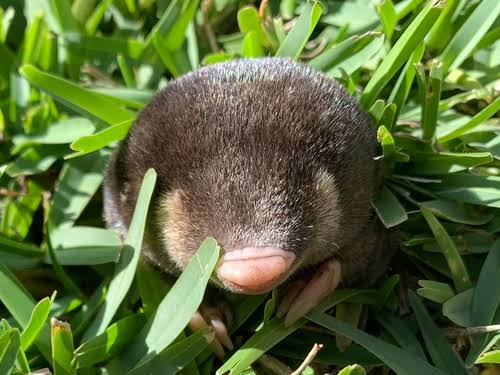
If I had to choose one of South Africa’s most misunderstood little mammals, the Cape Golden Mole would be right at the top of the list.
They spend almost their entire lives underground, quietly tunnelling beneath our feet while we go about our day completely unaware that one of the country’s most remarkable little animals is hard at work.
Despite the name, they aren’t true moles at all. They belong to their own unique genus of mammals (Chrysochloris) that evolved separately millions of years ago. They’re one of those wonderfully weird South African creatures that remind us just how special our biodiversity really is.
And yes… they really do shimmer.
Their fur has an oily coating that reflects light with a beautiful golden, bronze or even greenish sheen. That glossy coat also helps soil slide off as they burrow through the ground.
Here are a few more things that make them incredible:
They are completely blind. Their eyes are covered by skin because, honestly, when you spend your life underground, eyesight isn’t very useful.
They “swim” through soil using powerful front claws that work like tiny spades.
They don’t leave volcano-like mounds on your lawn like mole rats do.
Instead, they push through loose soil, which is why you often only see little raised ridges across lawns or sandy areas.
They can detect tiny vibrations through the ground, helping them find insects, worms, and grubs, and also avoid danger.
They do NOT destroy your plants! Their favourite menu includes earthworms, beetle larvae, termites and other small invertebrates that live beneath the soil. They are actually very useful to have in the garden!
So… what should you do if you find one?
The first thing is… don’t panic.
Cape Golden Moles sometimes appear above ground after heavy rain, flooding, construction work, gardening, or if a pet has disturbed them.
If the mole appears healthy and uninjured:
• Keep people and pets away.
• Handle it as little as possible.
• If it is in immediate danger, gently move it into nearby soft, undisturbed soil where it can dig back underground.
• Then leave it alone to do what golden moles do best.
If it is injured, covered in ants, picked up by a cat or dog, or unable to burrow, it will need help from a permitted wildlife rehabilitator.
![WILD TALK with Tortoise Conservation SA [watch]](https://wildways.org.za/wp-content/uploads/2026/07/Wild-Talk-TCSA-768x644.jpg)